

August 27, 2008
Biomedical Ethics contains more than 100 essays previously published in the journal Medical Ethics, many with commentaries and responses. Overall, the book is a satisfying read that presents many different complex ethical problems in an engaging manner. Many of the dilemmas highlight just how complicated bioethics and medical science have become in the 21st century. For example, one essay analyzes the case of a 42-year-old infertile woman who wishes to become pregnant via in vitro fertilization (IVF) using a donated egg. To maintain a genetic link to her child, she requests that her 70-year-old father be the sperm donor. (Genetically, the child would be her half brother.) (JAMA)
How do you appeal a heath claim denial?
Q: What recourse does a patient have when a health insurer or managed-care provider rejects a claim?
A: A patient’s first step should be talking to the insurer. Most have a toll-free number or help line people can use to ask questions or start an internal review of their claim. (Forbes)
Op-Ed: Cross-border reproductive care in Europe
The European Society for Human Reproduction and Embryology (ESHRE) has been concerned about the development of cross-border infertility treatment for some time. There are three reasons for this: the frequently negative publicity for infertility treatment presented as ‘reproductive tourism’, the increasing numbers and the risks for patients. (BioNews)
Doctors, family may be at odds over treatment
Some states — but not Florida — have so-called futility laws, in which providers are not required to give care which they believe is futile. (Bradenton)
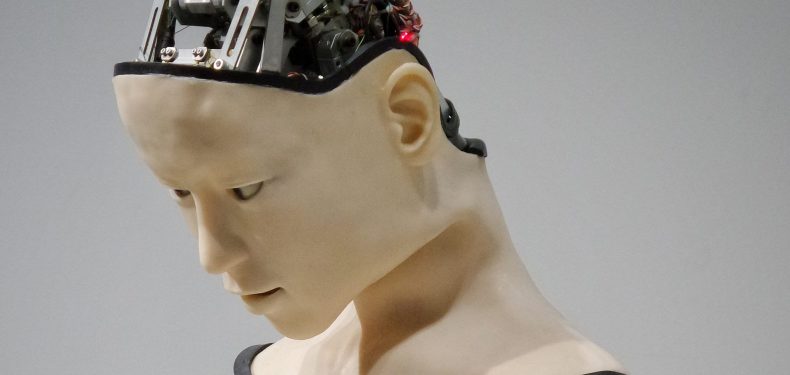
Robo-skeleton lets paralysed walk
A robotic suit is helping people paralysed from the waist down do what was previously considered impossible - stand, walk and climb stairs. (BBC)
Egypt septuplets stir debate on fertility drugs
The 27-year-old woman and her husband already had three children — all girls. They badly wanted a boy, and she had not conceived in five years, so doctors gave her hormones.
The startling result was healthy septuplets — four boys and three girls — heralded by Egyptian doctors as a miracle. But debate persists about the ethics of fertility treatment in a nation where medical oversight is lax, incubators and neonatal respirators are rare, and many families face pressure to have a son. (AP)
A Stem-Cell Revolution
Scientists at Harvard University recently announced a much anticipated milestone in regenerative medicine: the creation of stem cells from patients with a variety of diseases. The cells, which can be encouraged to develop into cell types damaged by disease, such as the insulin-producing cells in diabetes or neurons in Parkinson’s, are poised to give scientists an unprecedented view of disease. (MIT Technology Review)
Insurance gap leads some elderly to forgo medicine
Many people in Medicare with diabetes, high blood pressure and other chronic conditions stop taking their medicine when faced with picking up the entire cost of their prescriptions, researchers say.
About 3.4 million older and disabled people hit a gap, known as the doughnut hole, in their Medicare drug coverage in 2007. When that happened, they had to pay the entire costs of their medicine until they spent $3,850 out of pocket. Then, insurance coverage would kick in again. (Washington Post)
Medical blogs: Who are they good for?
Many medical blogs are anonymous and unedited, few contain reference sources for their authors’ statements, and most are open to comments from patients. With these limitations on oversight and reliability, can medical blogs offer genuine benefits to the public and the profession? (American Medical News)
Personal Genomics: Access Denied?
In April, a startup company called Navigenics threw a swanky 10-day celebration in lower Manhattan to launch its highly publicized personal-genomics service, which offers genetic risk assessments for 21 complex health conditions–such as heart attack and diabetes–that are partly mediated by multiple genes. (I received complimentary genotyping from Navigenics; it normally costs $2,500.) Unbeknownst to attendees, the New York State Department of Health had sent a warning letter a few days earlier to the company and 22 others that offer similar products, telling them that they needed a permit before they could sell their services. New York-based party goers would be unable to partake in Navigenics’ testing. (Technology Review)
Health Reform Prospects Fade as Presidential Campaign Enters Homestretch
As presidential aspirants geared up their issue analyses last fall, health reform ranked as the number one domestic policy item the next President should address in many national public opinion polls. As the campaign season draws to a close, however, health reform has virtually disappeared from the headlines, supplanted by concern about gas prices, home mortgage foreclosures, soaring food costs and, most recently, the “Soviet” invasion of Georgia. Though you will hear campaign rhetoric from both parties at their upcoming conventions, health reform has been demoted to the second tier of campaign issues. Their platforms and campaign pledges on health reform seem increasingly unlikely to decide who is the next president of the United States. (The Health Care Blog)
August 26, 2008
When religion and healthcare collide
Earlier this week, the California Supreme Court ruled against two physicians who allegedly denied — based on their religious opposition — a legal medical treatment to a patient based on her sexual orientation. The decision was issued in a lawsuit filed by a lesbian against doctors in a Vista, Calif., medical group who refused to artificially inseminate her.
This is a welcome, if unusual, turnabout in a disturbing trend that has characterized American medicine over the last three or so decades: an increasing willingness to allow the actions of individuals to disadvantage, and even endanger, others if those actions derive from religious faith. (Los Angeles Times)
Team’s method a boon for stem cell research
The discovery of stem cells in teeth, menstrual blood, amniotic fluid and other sources has peppered the headlines over the past few years.Scientists have even coaxed human skin cells backward down the development pathway, creating what they said were pluripotent stem cells, which have the ability to grow into many different cell types in the body.
But whether these stem cells have the same regenerative powers as embryonic stem cells was an educated guess, said Jeanne Loring, head of the stem cell research program at The Scripps Research Institute in Torrey Pines. (San Diego Union-Tribune)
New Article from Nature: “IVF: stars may have to consider the risk of stolen parenthood”
“IVF: stars may have to consider the risk of stolen parenthood” by Christoph Bock. Nature 454, 938 (21 August 2008). By subscription only.
Abstract:
‘Life after SuperBabe’ (Nature 454, 253; 2008) and Special Report ‘Making babies: the next 30 years’ (Nature 454, 260–262; 2008) summarize the far-reaching social and ethical implications that arise from progress in in vitro fertilization (IVF) and stem-cell research.
New Article from Nature: “IVF: tight regulation may not be suitable for all cultures”
“IVF: tight regulation may not be suitable for all cultures” by David Adamson. Nature 454, 938 (21 August 2008) By subscription only.
Abstract:
In her Essay ‘30 years: from IVF to stem cells’ (Nature 454, 280–281; 2008), Ruth Deech reminds us of the role that the Human Fertilisation and Embryology Authority (HFEA) has played through regulation in guiding the practice and scientific investigation of assisted-reproduction technology in the United Kingdom. But I disagree with her opinion that assisted reproduction in the United States is “nearly an unregulated black market”.
New Issue: Science and Engineering Ethics
A New Issue of Science and Engineering Ethics (14:3; September 2008) is available by subscription only.
Relevant articles include:
“Facing up to Creating Life: Synthetic Biology Unfolds its Wings” by Raymond E. Spier (p 299-300)
“The Emergence and Evolution of the Expression “Conflict of Interests” in Science: A Historical Overview, 1880–2006″ by Yves Gingras, Pierre-Marc Gosselin (p 337-343)
“Gene Concepts and Genethics: Beyond Exceptionalism” by Péter Kakuk (p 357-375)
“But is it Unique to Nanotechnology?” by Marion Godman (p 391-403)
New Article Alert: Centrosome Dysfunction in Drosophila Neural Stem Cells Causes Tumors that Are Not Due to Genome Instability
By subscription only
Abstract:
Genome instability (GI) and centrosomal alterations are common traits in human cancer. It is suspected that centrosome dysfunction may cause tumors by bringing about GI, but direct experimental proof is still lacking. To explore the possible functional link between centrosome function and overgrowth, we have assayed the tumorigenic potential of a series of mutants that affect different centrosomal proteins in Drosophila. We have found that a significant number of such mutant conditions are tumorigenic in larval brain tissue, where self-renewing asymmetric division of neural stem cells is frequent, but not in symmetrically dividing epithelial cells. We have also found that mutations that increase GI without causing centrosome dysfunction are not tumorigenic in our assay. From these observations, we conclude that the tumors caused by centrosome dysfunction cannot be explained solely by the resulting genome instability. We propose that such tumors might be caused by impaired asymmetric division of neural stem cells. These results show that centrosome loss, far from being innocuous, is a potentially dangerous condition in flies. (Current Biology)
Neuroethics is on the rise: centers specializing in neuroethics are opening at prestigious universities, national and international organizations in neuroethics are being formed, and mainstream philosophical and ethical associations are putting on conferences on neuroethics. Yet at the same time, many have major misgivings about the enterprise, because it is far from clear that neuroethics has a good definition, and it is far from clear that it has anything new to say. There is room for suspicion that it is just an opportunity for philosophers and ethicists to repackage theories they have been working on for a good long time already, and get new grant money and funding for it. Much of the work that has appeared on the subject so far has done little to allay such suspicions. (Metapsychology)
Proposal for ruling on DNA samples for newborn babies
A government backbencher has proposed that a ruling be made to compel newborn babies give deoxyribonucleic acid (DNA) samples. (New Straits Times)
Michigan Board Approves Stem Cell Measure For November Ballot
The Michigan Board of State Canvassers on Thursday certified a ballot measure that would loosen Michigan’s restrictions on human embryonic stem cell research, the Detroit Free Press reports (Bell, Detroit Free Press, 8/22). The board found the group Cure Michigan submitted nearly 500,000 signatures backing the proposal, which were 100,000 more than the required minimum to place a proposal on the ballot in the state (Heinlein, Detroit News, 8/22). (Medical News Today)
Repair Stem Cell Institute Says Stanford University’s Stem Cell Study Confirms the Futility of Embryonics in Human Therapy
The Repair Stem Cell Institute LLC (RSCI; http://www.RepairSemCells.org) reported today that Stanford University School of Medicine’s recent discovery there may be limitations to the effectiveness of human therapies derived from embryonic stem cells (ESC) because the cells injected in mice stimulated the kind of immune rejection seen with transplanted organs clearly delivers a blow to proponents of embryonic stem cell research who continue to ballyhoo the promise of ESC when in effect, as the Stanford study showed, the transplanted stem cells were dead within about seven to 10 days.Earthtimes)
|